5–50 KG BAGS / SACKS
BAG EMPTYING STATIONS
Manual or assisted bag-emptying stations introduce powder ingredients supplied in 5–50 kg bags into the process in a controlled manner.


Custom turnkey plants
From raw materials to the finished blend
We design, build and commission complete plants for powders and granules. Receiving, storage, conveying, dosing and mixing — engineered around your materials and production requirements.
From delivery to production
Every stage influences the next. We connect material receiving, storage, transfer, dosing and mixing into one coordinated plant, through to the downstream production interface.
Explore each stage and the automation that connects them.
Powders may arrive in bags, big bags or dry bulk tankers. We define unloading and the connection to your process around the supply format, material characteristics and required throughput.
5–50 KG BAGS / SACKS
Manual or assisted bag-emptying stations introduce powder ingredients supplied in 5–50 kg bags into the process in a controlled manner.
500–2,000 KG BIG BAGS / FIBCs
Big bag unloading stations manage the docking and controlled discharge of 500–2,000 kg bulk bags into storage or directly into the downstream process.
PNEUMATIC BULK TRUCK RECEIVING
The tanker’s onboard pneumatic system transfers powder to the storage silos. Wolmec engineers the plant-side connection, filling line and integration with the plant control system.
From process hoppers to high-capacity silos. Capacity, geometry, construction and discharge strategy follow powder behaviour, available space and downstream demand.

Compact intermediate storage sized around batch volume, dosing requirements and the downstream process.
A connected big bag or FIBC can feed the downstream conveying or dosing stage directly when the required production autonomy and plant layout make this the right solution.
Silos engineered around required capacity, available height, filling method and material behaviour.
Bolted-panel and project-specific geometries maximise storage capacity when space, access or installation constraints rule out a conventional cylindrical silo.
Indicative ranges. Final working volume and geometry depend on material data, production autonomy, filling method and layout.
Flowability, bulk density and moisture sensitivity determine the discharge geometry and whether fluidisation, vibration, a bin activator or percussion is required.
Working volume, autonomy and stock-control requirements define the vessel size, weighing strategy and the use of paddle, rope or radar level measurement.
Construction material, environmental exposure, product protection, safety valves and active pressure control are defined for the specific installation.
Wolmec evaluates mechanical conveying first, then pneumatic transfer where distance, routing or containment make it the better solution. Material behaviour, required capacity, elevation changes and plant layout determine the final choice.

Screw conveyors, bucket elevators and vibratory conveyors are selected according to material behaviour, required flow rate and transfer route.
Enclosed transfer by air is selected when distance, routing, containment or plant layout make it the most suitable solution.
Each conveying system is coordinated with receiving, storage, dosing and mixing to maintain consistent material flow across the complete process.
Wolmec integrates material extraction, feeding and weighing into dosing systems configured around powder behaviour, target quantity, batch sequence and required accuracy.

Bulk materials are extracted from silos, hoppers or big bags and fed into the weighing system according to the production recipe.
Dedicated systems manage smaller additions through controlled feeding and weighing, according to the material and target quantity.
Weighing data and automation coordinate target quantities, dosing sequence and transfer to the mixer.
Wolmec selects and integrates the mixing technology according to material properties, batch size and product requirements, coordinating ingredient loading, recipe execution and mixer operation within the complete plant.

Ribbon, ploughshare and other industrial mixer configurations are selected according to material properties, batch size and the required mixing action.
Ingredient loading order, mixer parameters and cycle sequence are coordinated through the plant automation.
Mixing parameters are defined according to the target homogeneity and the characteristics of the final blend.
Once the batch is complete, Wolmec coordinates the discharge and transfer of the prepared blend to an intermediate buffer or the agreed downstream interface.

Discharge is coordinated with batch completion and the selected receiving or transfer equipment.
The prepared blend can be collected in an intermediate hopper or conveyed directly to the next production stage.
Mechanical and control interfaces are developed around the agreed connection with the downstream equipment.
Wolmec develops the electrical and automation architecture that coordinates receiving, storage, conveying, dosing, weighing, mixing and product transfer from a single control environment.

Machines, instruments and process sequences operate as one coordinated system.
Recipes, target quantities, dosing sequences and mixer cycles are managed through the plant control system.
Operators access plant status, alarms and production data, with higher-level system integration available where required.
Process conditions, material risks and product requirements guide the measures defined for each project and operating environment.
Operating sequences, interlocks and equipment interfaces are defined around the process conditions and the safe management of each production stage.
Where combustible dusts may create an explosive atmosphere, applicable ATEX measures are defined from material data, area classification and a project-specific risk assessment.
Construction materials, containment and handling measures are selected according to contamination risks, environmental exposure and the characteristics of the product.
An existing plant, relocated and rebuilt around a new site. Storage, sand preparation, recipe dosing and mixing brought together in one production system.

Move an ageing powder plant into a different building, integrating retained equipment with new machinery and material routes.
A coordinated installation connecting sand preparation, silo storage, big-bag unloading, micro-dosing and a horizontal ploughshare mixer, with recipe control.
Existing and new equipment work as one production system, with storage, dosing, mixing and transfer coordinated around the new site.
A partner for the life of your plant
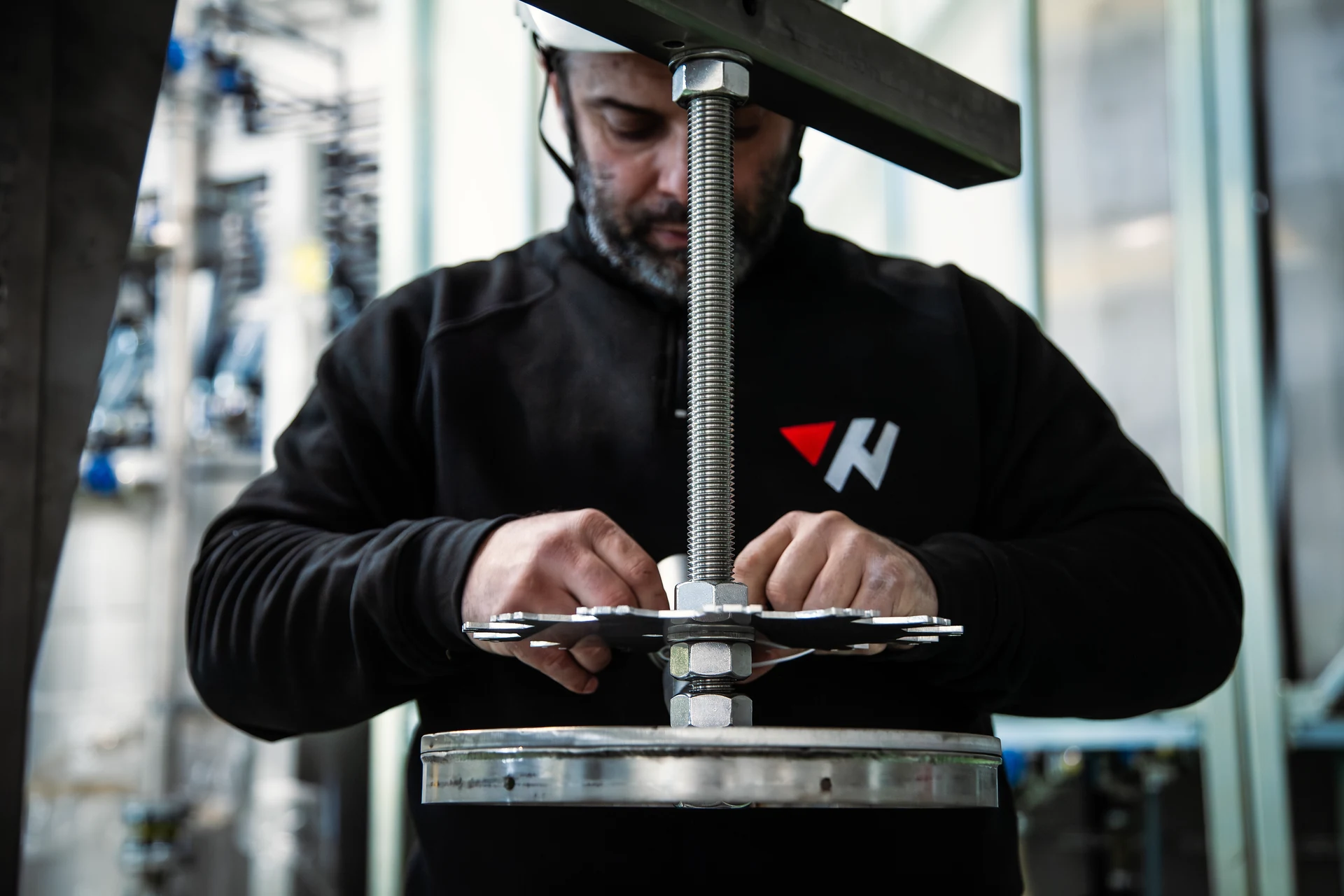
Scheduled preventive and corrective maintenance for Wolmec and third-party powder plants. Assess the condition, plan the intervention and follow through with technical reports and the next actions.
Explore Plant CareAnnual or six-month service plans. Third-party plants require an initial technical assessment.
A defined starting point for a specific duty
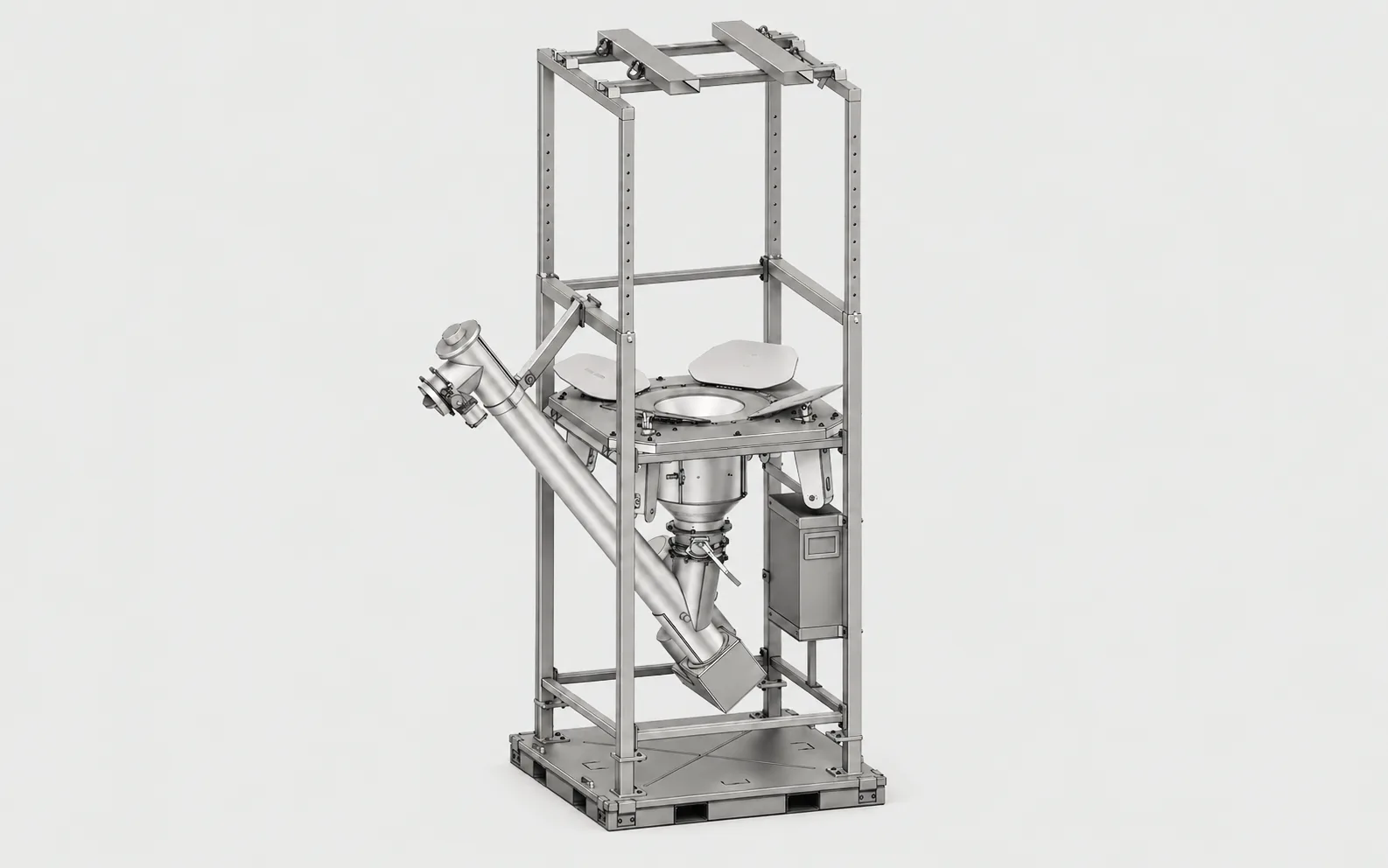
Equipment and controls brought together for bag unloading or big-bag dosing. Configured around your material and process connection, for stand-alone use or integration into a production line.
MOBILE · PRE-ENGINEERED
A fully assembled mobile unit for controlled weighing and screw-fed dosing from big bags, designed to be moved by forklift and connected rapidly at the required point of use.
Explore system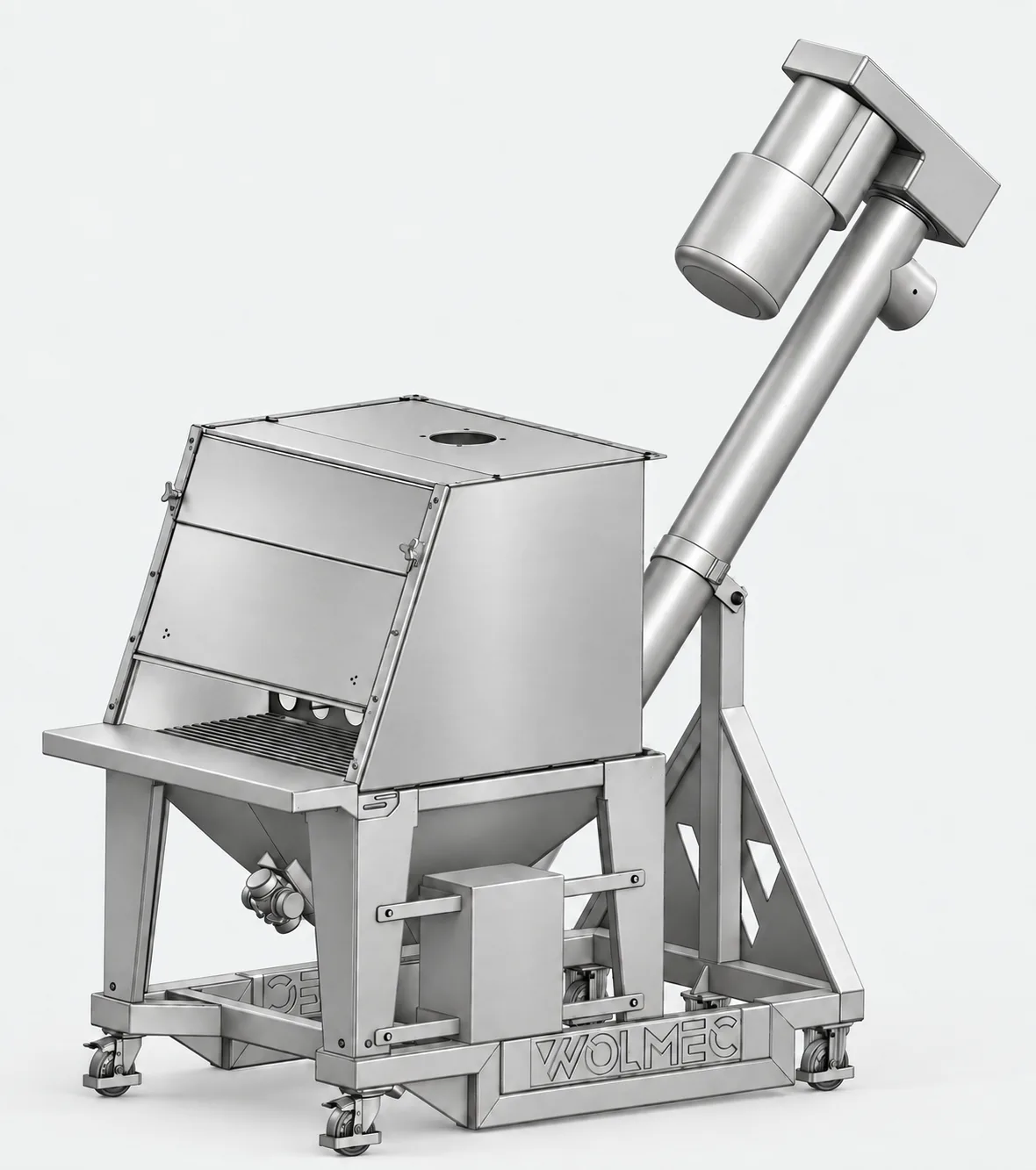
BAG HANDLING · PRE-ENGINEERED
Open powder bags at an enclosed hopper and convey the contents to the point of use. Configure construction, integrated dust filtration, electrical availability and ATEX execution.
Explore systemPractical questions
The first technical points to clarify when defining your powder plant.
Wolmec powder plants can be engineered for materials supplied in 5–50 kg bags, 500–2,000 kg big bags or FIBCs, and dry bulk tankers using the vehicle’s onboard pneumatic transfer system.
Wolmec evaluates mechanical conveying first and uses pneumatic transfer where distance, routing or containment make it more suitable. Material behaviour, capacity, elevation changes and the available plant layout determine the final architecture.
Storage is sized from material bulk density and flow behaviour, required production autonomy, refill frequency, filling method, available space and the needs of the downstream process.
Yes. Wolmec can engineer the mechanical, electrical and control interfaces around an agreed connection to an existing mixer or downstream production stage, subject to a technical assessment of the existing equipment.
Where combustible dust may create an explosive atmosphere, the required measures are defined from the material data, area classification and a project-specific risk assessment.
Start with your requirement
A new plant, more capacity or a process to improve. Tell us what you need to produce and where you are starting from.
You do not need a complete specification to start the conversation.